
Sema
Certificate of Analysis
Each batch is tested by an independent third-party laboratory. Certificate of Analysis is available upon request.
What is Sema?
What is Sema?
Sema, also known as Semaglutide, is a GLP-1 receptor agonist studied for its influence on metabolic signaling, appetite regulation, and insulin response. Research explores its role in modulating glucose uptake, energy balance, and endocrine function through peptide-mediated pathways.
Frequently asked questions
Are your products tested?
Yes, all products are tested by third-party laboratories to ensure purity and potency.
What is the shipping time?
Orders ship same day from our facility and typically arrive within 5–10 business days.
Do you offer bulk pricing?
Please contact us for bulk order inquiries.
Made in China
Peptides are precision-synthesized and lyophilized at state-of-the-art laboratories.

Sema Overview
Sema, also known as Semaglutide, is a synthetic peptide analog of glucagon-like peptide-1 (GLP-1) that is structurally modified for extended activity. It is studied in laboratory and preclinical models for its ability to activate GLP-1 receptors, regulate insulin signaling, and modulate cellular pathways associated with glucose metabolism and endocrine regulation.
History
Research into GLP-1 biology began in the 1980s with the identification of its role in glucose regulation and endocrine signaling. Early synthetic GLP-1 receptor agonists demonstrated promise in extending receptor activation, but limited half-life restricted their utility. Semaglutide was later developed with structural modifications at specific amino acid positions to improve receptor binding and extend duration of action, making it a useful tool for studying incretin biology and metabolic pathways in research models.
Semaglutide Structure
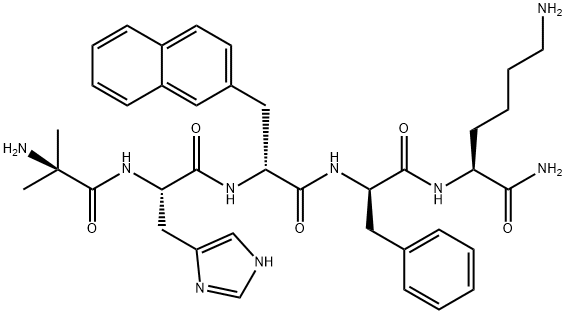
CAS #: 910463-68-2
Molecular Formula: C₁₈₇H₂₉₁N₄₅O₅₉
Molecular Weight: 4113.6 g/mol
PubChem ID: 56843331
Research Findings
Sema, also known as Semaglutide, has been studied in metabolic, endocrine, and cardiovascular models, with research highlighting its activity in glucose regulation, insulin secretion, and weight management pathways. Studies have also reported effects on lipid metabolism, appetite regulation, and cardiovascular outcomes in preclinical and clinical settings.
Key Areas of Research:
• Metabolic: glucose, insulin, energy balances
• Endocrine: GLP-1 signaling, hormone regulation
• Cardiovascular: lipid, cholesterol, outcomes
Together, these findings suggest broad experimental potential for Semaglutide across metabolic, endocrine, and cardiovascular pathways. By engaging GLP-1 signaling and influencing glucose and lipid metabolism, Semaglutide provides a versatile platform for research into metabolic regulation, cardiovascular health, and systemic resilience in laboratory models.