
PT-141
Certificate of Analysis
Each batch is tested by an independent third-party laboratory. Certificate of Analysis is available upon request.
What is PT-141?
What is PT-141?
PT-141, also known as Bremelanotide, is a synthetic peptide classified as a melanocortin receptor agonist. In laboratory research, it is studied for its activity within the central nervous system and its interactions with melanocortin pathways.
Frequently asked questions
Are your products tested?
Yes, all products are tested by third-party laboratories to ensure purity and potency.
What is the shipping time?
Orders ship same day from our facility and typically arrive within 5–10 business days.
Do you offer bulk pricing?
Please contact us for bulk order inquiries.
Made in China
Peptides are precision-synthesized and lyophilized at state-of-the-art laboratories.

PT-141 Overview
PT-141, also known as Bremelanotide, is a synthetic peptide analog of α-melanocyte-stimulating hormone (α-MSH). It is studied in laboratory and preclinical models for its ability to activate melanocortin receptors (MC3R and MC4R), which are involved in neuroendocrine signaling, energy regulation, and vascular pathways.
History
PT-141 was developed through research into melanocortin peptides, originally derived from modifications of Melanotan II. While Melanotan II was primarily studied for its pigment-inducing properties, PT-141 was synthesized to focus on central melanocortin receptor activity. Since its discovery, PT-141 has been investigated in models of neuroendocrine function, vascular regulation, and receptor-mediated signaling.
PT-141 Structure
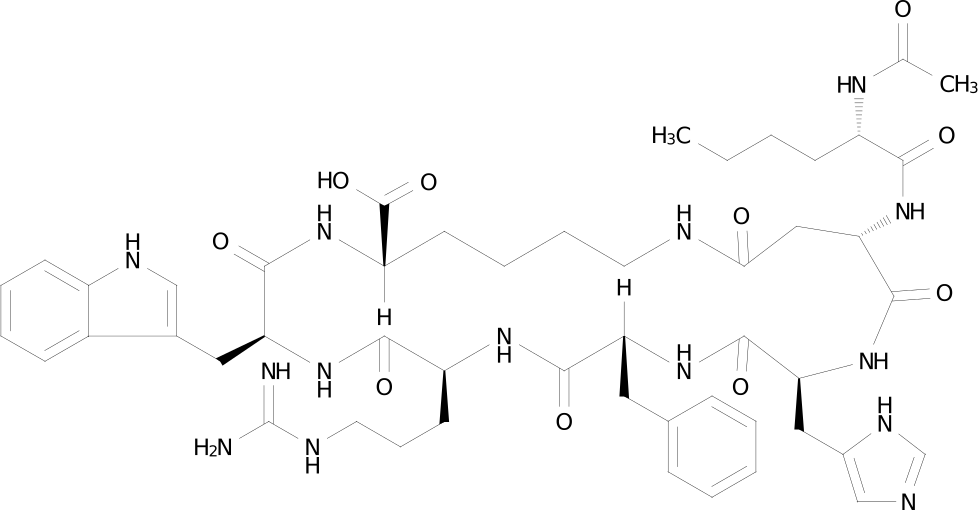
CAS #: 189691-06-3
Molecular Formula: C₅₀H₆₈N₁₄O₁₀
Molecular Weight: 1025.2 g/mol
PubChem ID: 6918280
Research Findings
PT-141 has been studied in neurological, endocrine, and systemic models, with research highlighting its activity in melanocortin receptor pathways, neuroendocrine signaling, and systemic regulation. Studies also report effects on central nervous system activity, hormone modulation, and vascular responses in preclinical settings.
Key Areas of Research:
• Neurological: CNS activity, receptor signaling, pathways
• Endocrine: hormone modulation, signaling balance
• Systemic: vascular responses, recovery, resilience
Together, these findings suggest experimental potential for PT-141 across neurological, endocrine, and systemic pathways. By engaging melanocortin receptors and influencing neuroendocrine activity, PT-141 provides a versatile platform for research into signaling biology, systemic balance, and central regulation in laboratory models.