GHK-Cu
Certificate of Analysis
Each batch is tested by an independent third-party laboratory. Certificate of Analysis is available upon request.
What is GHK-Cu?
What is GHK-Cu?
“GHK-Cu, commonly referred to as Copper Peptide, is a naturally occurring tripeptide complex found in plasma and other biological fluids. In laboratory research, it is studied for its role in protein regulation, gene expression, and cellular signaling pathways
Frequently asked questions
Are your products tested?
Yes, all products are tested by third-party laboratories to ensure purity and potency.
What is the shipping time?
Orders ship same day from our facility and typically arrive within 5–10 business days.
Do you offer bulk pricing?
Please contact us for bulk order inquiries.
Made in China
Peptides are precision-synthesized and lyophilized at state-of-the-art laboratories.

GHK-Cu Overview
GHK-Cu (glycyl-L-histidyl-L-lysine:copper(II)) is a naturally occurring copper-binding tripeptide studied for its role in cellular signaling, tissue remodeling, and repair pathways. In laboratory and preclinical models, GHK-Cu has been associated with modulation of gene expression, angiogenesis, and extracellular matrix activity, making it a valuable tool for research into regenerative biology.
History
GHK was first identified in the 1970s in human plasma, where it was observed to decline with age. Subsequent research demonstrated that complexing GHK with copper enhanced its biological activity, particularly in processes related to wound healing and tissue regeneration. Over the years, GHK-Cu has been extensively studied in models of skin biology, angiogenesis, and systemic regulation of gene expression.
GHK-Cu Structure
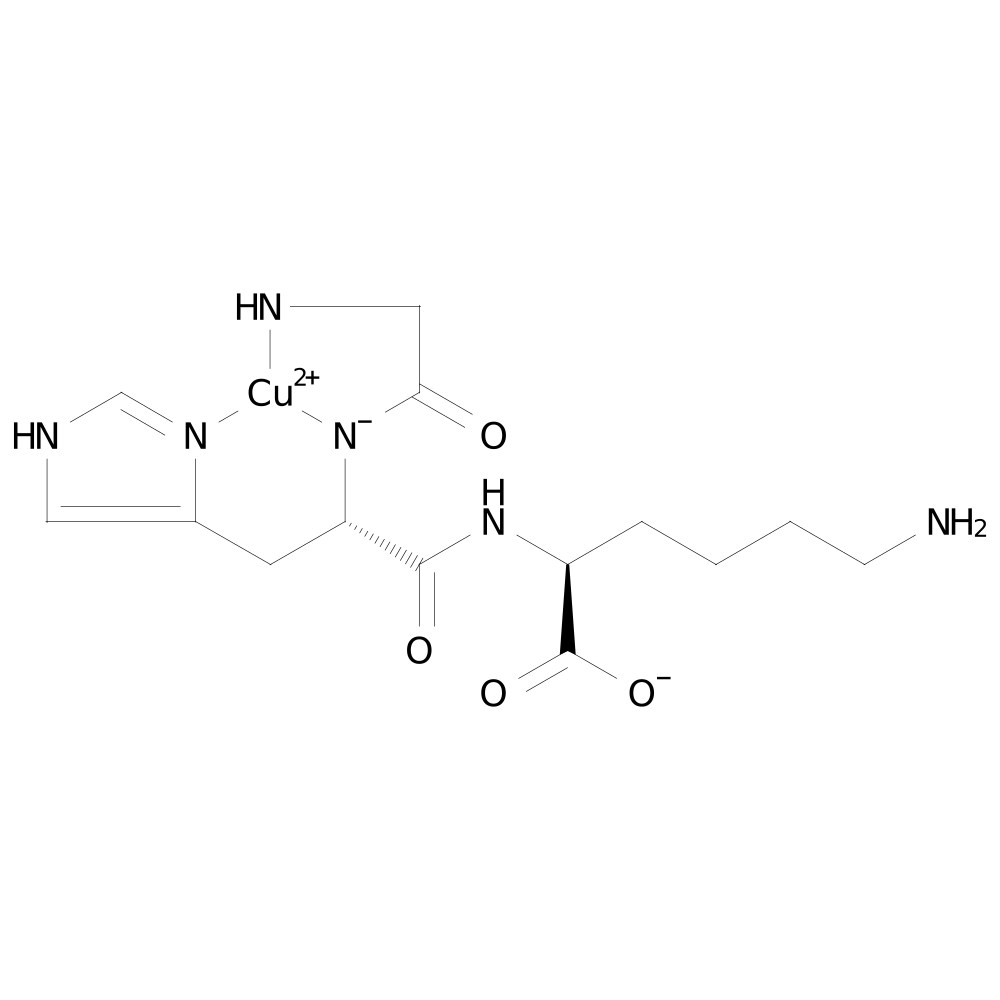
CAS #: 89030-95-5
Molecular Formula: C₁₄H₂₄CuN₆O₄
Molecular Weight: 340.9 g/mol
PubChem ID: 5311476
Research Findings
GHK-Cu has been studied in structural, dermatological, and systemic models, with research highlighting its effects on collagen synthesis, wound healing, and tissue repair. Studies also note its role in skin regeneration, hair growth, and anti-inflammatory activity in preclinical settings.
Key Areas of Research:
• Structural: collagen, matrix, connective tissue
• Dermatological: wound healing, skin regeneration, hair growth
• Systemic: inflammation, repair, recovery
Together, these findings suggest broad experimental potential for GHK-Cu across structural, dermatological, and systemic pathways. By supporting collagen formation and tissue repair while modulating inflammatory responses, GHK-Cu provides a versatile platform for research into regeneration, skin biology, and systemic recovery in laboratory models.