
Cagrilintide
Certificate of Analysis
Each batch is tested by an independent third-party laboratory. Certificate of Analysis is available upon request.
What is Cagrilintide?
What is Cagrilintide?
Cagrilintide is a synthetic peptide analog of the hormone amylin. In laboratory research, it is studied for its activity on amylin receptors and its role in signaling pathways related to appetite regulation and satiety.
Frequently asked questions
Are your products tested?
Yes, all products are tested by third-party laboratories to ensure purity and potency.
What is the shipping time?
Orders ship same day from our facility and typically arrive within 5–10 business days.
Do you offer bulk pricing?
Please contact us for bulk order inquiries.
Made in China
Peptides are precision-synthesized and lyophilized at state-of-the-art laboratories.

Cagrilintide Overview
Cagrilintide is a synthetic, long-acting analog of the naturally occurring peptide amylin. It is studied in laboratory and preclinical models for its ability to activate amylin and calcitonin receptors, contributing to the regulation of metabolic and neuroendocrine pathways. Research has examined its role in modulating satiety signals, gastric emptying, and systemic metabolic processes.
History
Research into amylin biology began in the late 20th century with its identification as a pancreatic peptide co-secreted with insulin. Native amylin was found to influence metabolic regulation but was limited by rapid degradation. Cagrilintide was later developed as a stabilized analog with prolonged receptor activity, providing a research tool for studying calcitonin receptor family signaling and endocrine cross-talk in metabolic systems.
Cagrilintide Structure
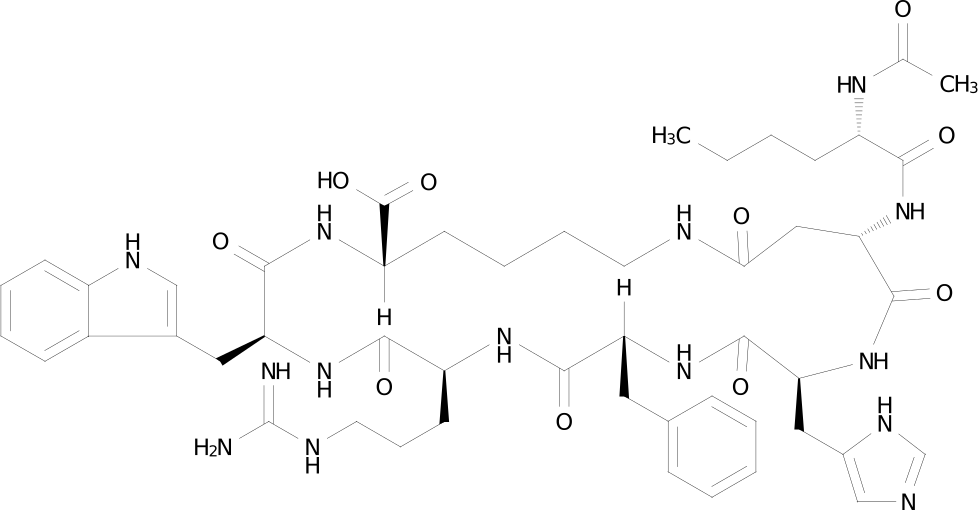
CAS #: 1415456-99-3
Molecular Formula: C₂₉₄H₄₆₆N₈₄O₈₈S₂
Molecular Weight: 6781.6 g/mol
PubChem ID: 137465331
Research Findings
Cagrilintide has been studied in metabolic, endocrine, and systemic models, with research highlighting its role in appetite regulation, energy balance, and weight-related pathways. Studies also report activity in amylin receptor signaling, glucose regulation, and metabolic homeostasis in preclinical and clinical settings.
Key Areas of Research::
• Metabolic: appetite, energy balance, weight regulation
• Endocrine: amylin signaling, glucose control
• Systemic: metabolic homeostasis, resilience, recovery
Together, these findings suggest broad experimental potential for Cagrilintide across metabolic, endocrine, and systemic pathways. By engaging amylin receptor biology and influencing appetite and glucose regulation, Cagrilintide provides a versatile platform for research into metabolic balance, weight biology, and systemic regulation in laboratory models.